At Funeral Filming, we understand that the idea of having a funeral photographed can feel unfamiliar to many families, even though it has become a more common and accepted part of saying goodbye to a loved one. A well-chosen professional funeral photographer captures moments that families often struggle to remember clearly afterwards, given how emotional and overwhelming the day usually is. This guide is written to help you understand what to look for when choosing someone for this role, so the coverage feels respectful rather than intrusive. If you would like to see how our own funeral photography service approaches this, it may help to explore what a typical package includes before making any decisions.
Why Families Choose to Photograph a Funeral
Grief affects memory in ways that surprise many people. Details of the day, from who attended to how the flowers looked, often blur together within weeks or months. Having photographs allows family members who were present to look back later with more clarity, and gives those who could not attend, whether due to distance, health, or other circumstances, a way to feel connected to the service. For some families, photographs also become part of a wider keepsake, alongside items such as the order of service or tributes shared during the ceremony. None of this replaces the experience of being there, but it does preserve something meaningful that would otherwise fade with time.
What Discreet Memorial Coverage Actually Means
The word discreet matters a great deal in this context, and it is worth understanding what it looks like in practice. Discreet memorial coverage means a photographer works quietly in the background, without drawing attention away from the service itself or making mourners feel observed. This typically involves the following approach.
- Using a camera without a loud shutter sound or visible flash during the ceremony
- Positioning themselves at the edges of the room or venue rather than in the centre of activity
- Avoiding direct interaction with guests unless specifically asked to do so
- Capturing candid moments rather than staged or posed shots during the service itself
- Dressing appropriately in subdued, formal clothing that blends into the setting
A photographer who understands these expectations will rarely be noticed during the service, yet the resulting images will still capture the atmosphere, the people present, and the meaningful moments that unfolded throughout the day.
What to Look for When Choosing a Professional Funeral Photographer
Choosing the right person for this role involves more than simply hiring someone with a good camera. A few specific qualities tend to separate an experienced funeral photographer from someone who typically works in other areas of photography.
- Previous experience specifically photographing funerals or memorial services, not just weddings or events
- A calm, respectful manner when speaking with grieving family members
- A clear willingness to follow guidance from the family about what should and should not be photographed
- Sensitivity around cultural or religious customs relevant to the service
- A portfolio or references that reflect this specific type of work
Experience matters here in a way that differs from most other photography settings. Someone who regularly photographs weddings may be highly skilled technically, yet still unfamiliar with the pacing, tone, and boundaries expected during a funeral.
Questions to Ask Before Booking
Before confirming a booking, it helps to have a short conversation that covers the practical and emotional aspects of the day. A few useful questions to raise beforehand include the following.
- How much experience do you have photographing funerals specifically, rather than other types of events
- What is your approach to staying unobtrusive during the service itself
- Are you comfortable following specific requests, such as avoiding certain moments or individuals
- How soon after the service will the photographs be available to the family
- Do you offer any printed keepsakes or albums alongside digital copies
Asking these questions in advance helps set clear expectations and gives the family confidence that the day will be handled with the appropriate level of care.
The Difference Between Funeral Photography and Videography
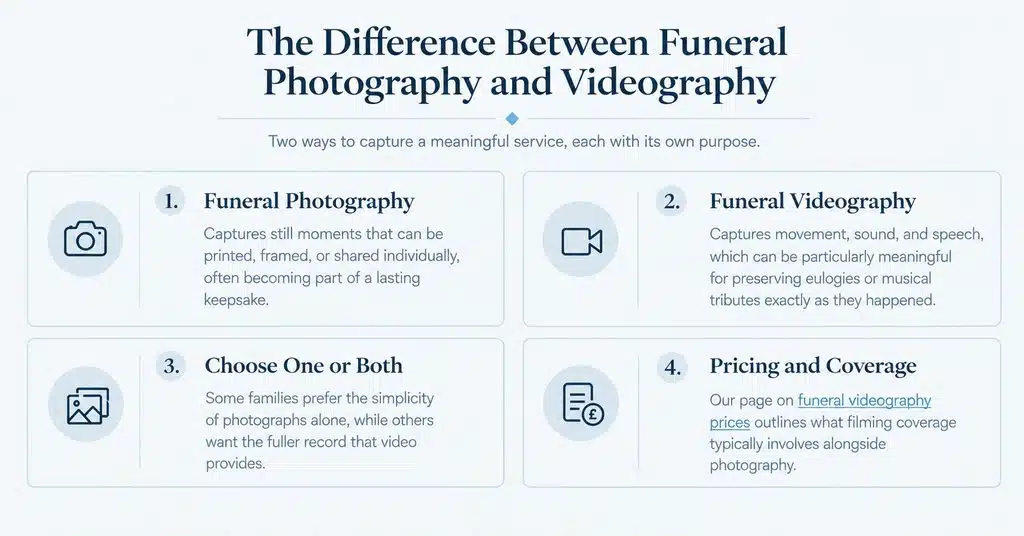
Photography and videography serve slightly different purposes, and some families choose one, the other, or both together. Photography captures still moments that can be printed, framed, or shared individually, often becoming part of a lasting keepsake. Videography, on the other hand, captures movement, sound, and speech, which can be particularly meaningful for preserving eulogies or musical tributes exactly as they happened. Some families prefer the simplicity of photographs alone, while others want the fuller record that video provides. If you are weighing up which option suits your family’s wishes, our page on funeral videography prices outlines what filming coverage typically involves alongside photography.
How Photographers Work Respectfully During a Service
A significant part of choosing the right photographer comes down to trusting how they will conduct themselves throughout the day. Respectful photography during a funeral generally follows a quiet rhythm, moving between key moments such as the arrival of the coffin, readings, moments of reflection, and the gathering afterwards. A skilled photographer reads the emotional tone of the room and adjusts accordingly, stepping back during particularly private moments and capturing images only when it feels appropriate to do so. This balance between documenting the day and respecting its emotional weight is something that develops through experience, which is why background and familiarity with this specific type of work matter so much.
Considering Coverage Across Different Locations
Funeral services take place in a wide range of settings, from crematoriums and churches to family homes and outdoor memorial gatherings. A photographer familiar with local venues often understands lighting conditions, layout, and typical service flow in advance, which allows them to work more smoothly on the day itself. Families arranging services in and around London or in areas such as Bedfordshire may find it helpful to work with a photographer who already has experience covering services in those specific regions, since local familiarity can make the day feel slightly less unpredictable for everyone involved.
Preparing Family Members for the Day
It often helps to let close family members know in advance that a photographer will be present, so no one feels caught off guard during the service. A brief explanation beforehand, such as letting relatives know that coverage will be discreet and respectful, tends to ease any initial hesitation. Some families also choose to designate a specific point of contact, often a close friend or family member, who can communicate any last-minute preferences to the photographer on the day itself. This small step removes pressure from grieving family members who may not want to think about logistics during such an emotional time.
Choosing Between Photography, Filming, or Live Streaming
Alongside photography, some families are also considering whether to arrange filming or live streaming so that relatives who cannot attend in person are still able to take part in the service. This has become increasingly common, particularly for families with relatives living overseas or unable to travel due to health reasons. If this is something your family is considering, our page on funeral live streaming explains how this option works alongside photography, allowing distant relatives to feel included even when they cannot be physically present.
Making the Decision With Confidence
Choosing a professional funeral photographer is ultimately about finding someone whose presence feels reassuring rather than distracting during an already difficult day. Taking the time to ask questions, review previous experience, and clarify expectations in advance tends to make the entire process feel more manageable. If you would like to read further guidance on planning this part of a service, our funeral blog covers related topics that many families find useful while making these decisions.
Frequently Asked Questions
1. Is it normal to have a funeral photographed?
Yes, this has become increasingly common in the UK. Many families find that photographs help preserve memories of the day that might otherwise fade over time, and they can also be shared with relatives who were unable to attend.
2. Will a funeral photographer be noticeable during the service?
A skilled, experienced funeral photographer works quietly and discreetly, staying at the edges of the venue and avoiding disruptive equipment such as flash photography, so their presence should not draw attention during the ceremony.
3. Can I request that certain moments are not photographed?
Yes. A professional funeral photographer should always be willing to follow specific instructions from the family, including avoiding particular individuals or moments that feel too private to capture.
4. How soon after the funeral will I receive the photographs?
This varies by photographer, though many provide an initial set of images within a week or two, with a fuller collection following shortly after. It is worth asking about expected timelines before booking.
5. Should I tell family members in advance that photographs will be taken?
It is generally helpful to let close relatives know beforehand, so no one feels surprised during the service. A brief explanation in advance usually eases any initial concerns.
6. What is the difference between funeral photography and funeral videography?
Photography captures still images that can be printed or shared individually, while videography records movement and sound, which is often used to preserve eulogies, readings, or musical tributes in full.
7. Can photography be arranged alongside live streaming for relatives who cannot attend?
Yes, many families choose to combine both, allowing distant relatives to watch the service as it happens while photographs provide a lasting keepsake afterwards.
8. Do funeral photographers need specific experience compared to other photographers?
Experience specifically with funerals matters a great deal, since the pacing, tone, and boundaries of a memorial service differ significantly from other types of events such as weddings.
9. What should I look for in a funeral photographer’s portfolio?
Look for previous examples of memorial or funeral coverage specifically, along with evidence of a calm, respectful approach rather than a highly staged or posed style more common in other photography work.
10. Is funeral photography suitable for religious or cultural services with specific customs?
Yes, provided the photographer is informed in advance and shows willingness to respect any particular customs or restrictions relevant to the service, which should always be discussed before the day itself.